
Agriculture · Botany · Horticulture
Ramie The Strongest Vegetable Fibre
US$81.00US$90.00You save US$9.00
- ISBN
- 9789391734190
- Year
- 2021
- Binding
- Hardbound
- Language
- English
- Total pages
- 136
- Ebook
- Coming soon
About the Book
The book “Ramie – The Strongest Vegetable Fibre Plant” provides comprehensive information on ramie, an important natural fibre crop known for producing one of the strongest vegetable fibres. The main objective of the book is to compile and present scientific information scattered across various publications on ramie cultivation, propagation and fibre extraction. It serves as a valuable reference for undergraduate and postgraduate students, researchers and agricultural professionals. The book explains the botanical characteristics, origin, importance and economic potential of the ramie crop. It provides detailed information on suitable climatic conditions, soil requirements and agro-ecological factors for successful ramie cultivation. Various aspects of crop establishment, propagation methods and improved cultivation practices are discussed. Special emphasis is given to fibre production, harvesting techniques and different methods of fibre extraction. The book highlights the unique strength, quality and industrial importance of ramie fibre. It incorporates research findings and scientific developments related to ramie cultivation from India as well as other countries. The contents are systematically organized into chapters, headings and subheadings for easy understanding. Relevant photographs, research data and scientific information have been included to make the subject more informative and practical. The book also addresses the needs of entrepreneurs and stakeholders involved in the ramie sector, from cultivation to processing and marketing of ramie products. It provides useful references to original research publications, helping readers explore the subject in greater depth. Written in simple and understandable language, the book is particularly helpful for beginners, students, farmers, researchers and people interested in the natural fibre industry. Overall, the book aims to promote awareness, scientific cultivation, commercial utilization and industrial development of ramie as a valuable natural fibre crop, creating opportunities for farmers and entrepreneurs.
Ramie The Strongest Vegetable Fibre by Pranab Talukdar and Ashutosh Roy.
136 pages · English · Published 2021
Subjects: Agriculture, Botany, Horticulture
About Author
Dr Pranab Talukdar (b.1953 in Guwahati), Retired Professor is an eminent educationist who served as Professor & Head, Department of Plant Breeding and Genetics, Assam Agricultural University, Jorhat. Dr Talukdar did his B.Sc. (Agri) and M.Sc. (Agri) in Plant Breeding & Genetics from Assam Agricultural University. A recipient of World Bank IDA Fellowship for doctoral research he did his Ph.D. degree from Punjab Agricultural University, Ludhiana. Then he joined Assam Agricultural University in 1980 as Assistant Professor. He had developed a number of PG courses and instrumental in developing National Vocational Course Curriculum on Seed Science & Technology. Dr Talukdar has so far guided 14 Ph.D. scholars and 35 M.Sc. (Agri) students as Major Adviser. He was the recipient of FAO fellowship and served CIMMYT, Mexico as Visiting Scientist in 1995. He made oral presentations in a number of National and International Conferences including International Genetic Congress held in New Delhi in 1983. He had published 85 research publications in national and international referred journals. He is also credited with 5 book chapters. Dr Talukdar earned ICAR Ad-hoc research project on “Breeding ramie [Boehmeria nivea (L.) Gaud] for utilization of hybrid vigour”. Developed protocols of aseptic culture of ramie seeds, shoot-tip, nodal segment cultures and rooting in the regenerated hybrids He also served as Visiting Fellow in the Department of Life Sciences, Dibrugarh University. He also made significant contribution in the field of plant genetic resource management and collaborated with NBPGR participating in PGR expeditions in N.E.India resulting in more than 1000 accessions currently conserved in National Gene Bank, NBPGR, New Delhi. Dr Talukdar was also a Member, Governing Body, Assam State Seed Certification Agency from 2003 to 2005, Member, Board of School, SASRD, Nagaland University, 2003-2006, Expert Member, Selection Committee of Chinese Govt PG Fellowship, Ministry of H. R.D., in 2005 and 2006. Dr Talukdar was instrumental in formulating State Seed Plan and State Seed Bank for Assam being the Convenor of the Task Force of Govt. of Assam in 2002-2003.
Dr. Ashutosh Roy (b.1958) is the Chief Scientist at the Regional Agricultural Research Station, Assam Agricultural University, Diphu. With more than 22 years of experience in the Hill Zones of Assam he has worked extensively and published more than 70 scientific papers in national and international journals of repute. He received his B.Sc (Agri) and M.Sc (Agri) degree from Assam Agricultural University, Jorhat, Assam and he was awarded Jawaharlal Nehru Memorial Fund Award in 1984 for his excellent performance in M.Sc (Agri). During his M.Sc (Agri) he has done his thesis work on “Genetic Studies on ramie(Boehmeria nivea(L) Gaud” He received his Ph.D. degree in Plant Breeding from CCSHAU, Hisar, Haryana and a recipient of ICAR senior Fellowship for his Ph.D. degree. He has had a brilliant academic career all through and continues to guide upcoming researchers in the field. His work in the hill regions of Assam has led to the development of a number of varieties of rice, sesame and chilli focusing their suitability to the conditions of the jhum land in the Hills Zone of Assam. Few of these rice varieties viz., ‘Inglongkiri’, ‘Ronghang’ and Dehangi’ have been released and notified in the Gazette of India during 2017. One of the leading figures in Hill and Arid zone cultivation, Dr. Roy has also been involved as Principal Investigator in a number of externally funded collaborative projects . He has been particularly involved in fibre crops research viz., ramie, jute and cotton since the beginning of his scientific career and is a member of a number of scientific bodies and associations. He was the principal investigator of National Agricultural Technology Project -RCPS 9 project entitled “Develop and Evaluate Production Technologies for indigenous cotton in North eastern Region” where he led a team of researchers from the Assam Agricultural University and the Central Institute of Cotton Research, Nagpur. An active researcher in the agricultural practices of the hill zone of Assam, he also has been involved in the evaluation of a number of M.Sc and Ph.D. theses of Nagaland University as external examiner from 2015 onwards.
Content
�Introduction. �Origin and history. �Climate and soil required for cultivation. �Distribution of species. �Phylogenetic relationship. �Description of the plant. �Physiological studies of ramie. �Genetic improvement. �Conservation of ramie plant genetic resources. �Planting material. �Pre planting operations. �Nutrient requirement. �Planting. �Post planting management and harvesting. �Extraction and decortications. �Replanting. �Pests and diseases. �Fibre yield. �Properties of ramie fibre. �Use of ramie fibre. �Production of ramie. �Economics of ramie cultivation. �Prospect of ramie in North East India. �Conclusion. �Reference.
Similar books
Agriculture · Plant Breeding and Genetics
Advances in Vegetable Breeding
US$127.80US$142.00
Book details for Advances in Vegetable Breeding
Agriculture · Food Science & Post Harv. Tech. · Horticulture
Recent Treands in Vegetable Production
US$72.00US$80.00
Book details for Recent Treands in Vegetable Production
Agriculture · Botany · Horticulture
Textbook of Vegetable Production 2/Ed
US$67.50US$75.00
Book details for Textbook of Vegetable Production 2/Ed
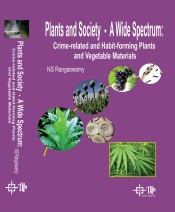
Agriculture · Botany · Soil Sc./Agronomy
Plants and Society - A Wide Spectrum : Crime-Related and Habit Forming Plants and Vegetable Materials
US$45.00US$49.75
Book details for Plants and Society - A Wide Spectrum : Crime-Related and Habit Forming Plants and Vegetable Materials
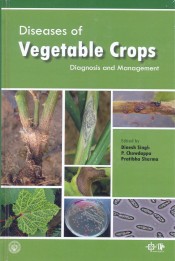
Agriculture · Botany · Plant Pathology
Diseases of Vegetable Crops: Diagnosis and Management
US$270.00US$299.75
Book details for Diseases of Vegetable Crops: Diagnosis and Management

Agriculture · Botany · Engineering · Food Science & Post Harv. Tech. · Agriculture Engineering · Horticulture
Advances in Post Harvest Management, Processing and Value Addition of Horticultural Crops Part 1 : Fruits and Flower , Part 2 : Vegetable, Spices & Plantation Crops (Vol 1-2 Set )
US$450.00US$499.75
Book details for Advances in Post Harvest Management, Processing and Value Addition of Horticultural Crops Part 1 : Fruits and Flower , Part 2 : Vegetable, Spices & Plantation Crops (Vol 1-2 Set )

Agriculture · Botany · Plant Pathology
Review of Tropical Plant Pathology Supplement No.2 Diseases of Fibre and Oilseed crops
US$58.00US$64.75
Book details for Review of Tropical Plant Pathology Supplement No.2 Diseases of Fibre and Oilseed crops