Food Science & Post Harv. Tech.
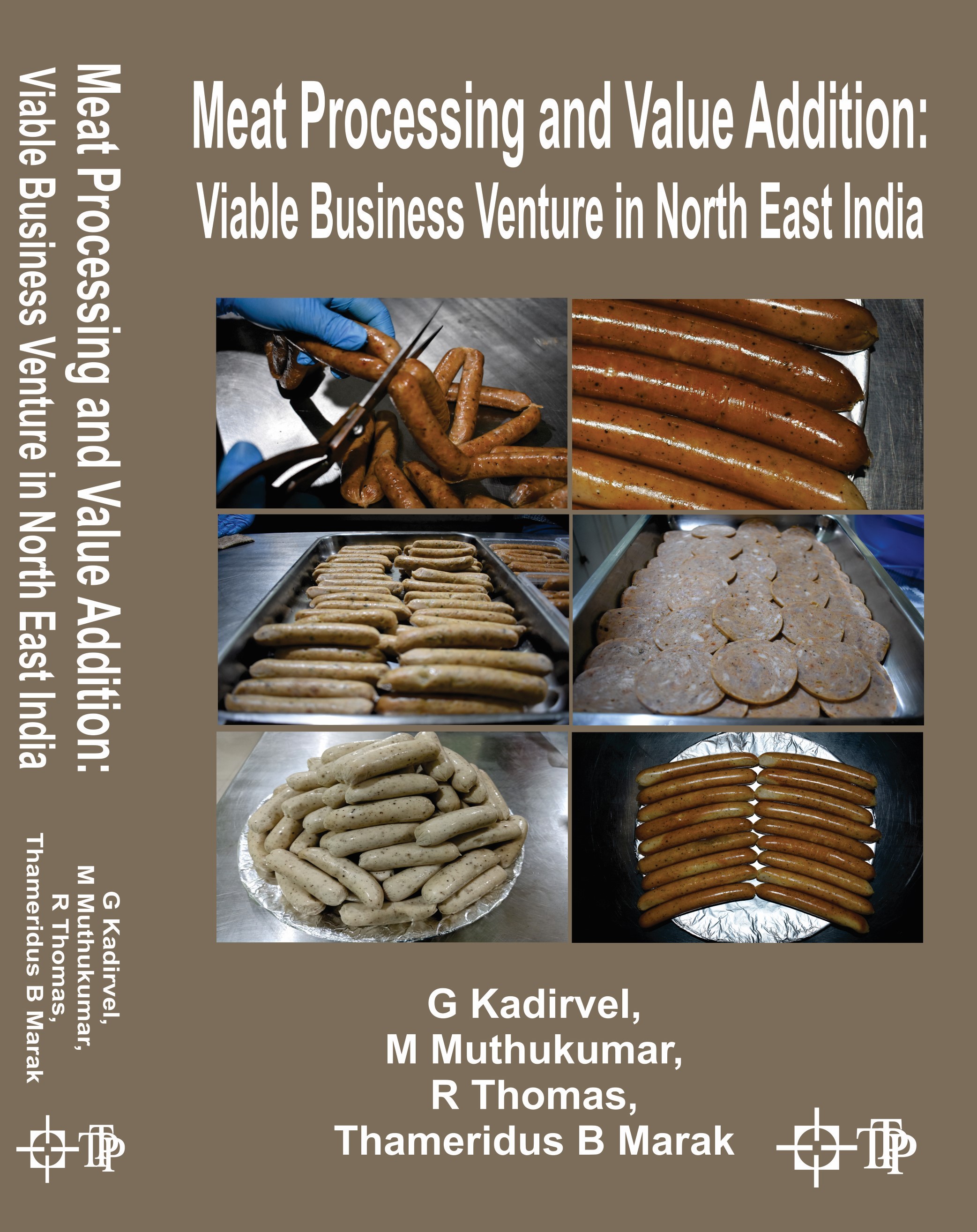
Meat Processing and Value Addition : Viable Business Venture in North East India
₹1,795.50₹1,995.00
Book details for Meat Processing and Value Addition : Viable Business Venture in North East India

Agriculture · Botany
Organic Spices in North East India by Avasthe, R et al..
328 pages · English · Published 2021
Subjects: Agriculture, Botany
Dr Ravikant Avasthe has held the positions of, Principal Scientist (Soils) and Joint Director of ICAR-National Organic Farming Research Institute (formerly ICAR Sikkim Centre), Tadong, Gangtok since July 2013. Prior to assuming the current position at Gangtok, he was the Head, Division of Human Resource Development and Social Sciences, Indian Institute of Soil and Water Conservation, Dehradun (Uttarakhand), a premier institute of Indian Council of Agricultural Research involved in soil and water conservation and watershed management during 2011-13. He has enormous and varied experience of research, extension and capacity building in the field of organic farming; soil fertility management in cereals, pulses, oilseeds and vegetables; development of organic nutrient management packages for rice, maize, buckwheat, mustard and soybean, spices, especially, large cardamom and ginger, soil acidity management and soil and water conservation, organic conservation agriculture, watershed management and integrated organic farming systems. Before moving to Dehradun, Dr. Avasthe served ICAR Research Complex for NEH Region, Sikkim Centre as Senior Scientist (Soil Science) during 2000-08 and as Principal Scientist from 2008 to 2011. His career with Indian Council of Agricultural Research began as Sr. Scientist (Soil Science) at ICAR-Indian Institute of Oil Palm Research, Eluru, West Godavari district in Andhra Pradesh in the year 2000. Initially, during 1992- 94 he was Scientist at ICAR Sikkim Centre and thereafter, in 1994 as Senior Programme Officer with World Wide Fund for Nature-India (WWFIndia) started the biodiversity conservation initiatives and developed and implemented many biodiversity conservation projects including high altitude surveys related to biodiversity, wetlands, raising emergent issues demanding conservation attention, commencement of environmental education and awareness programmes in schools and colleges of Sikkim for WWF-India under the Biodiversity Hotspots Conservation Programme and was responsible for the establishment of WWF-India Sikkim Field Office in 1994 and worked till 1999. Declaration of Pangolakha Wildlife Sanctuary in 2000 was an outcome of the efforts of WWF-India and Forest, Environment and Wildlife Development Department, Government of Sikkim. Initially he served as Research Associate at the International Crops Research Institute for Semi Arid Tropics (ICRISAT), Hyderabad during 1984-87, Indian Agricultural Research Institute (IARI), Pusa, New Delhi and Central Research Institute for Dryland Agriculture (CRIDA), Hyderabad (1991-92). He has more than 530 publications as research papers in peer reviewed national and international journals/Proceedings, books, reports, technical bulletins/folders, manuals, book chapters etc.
Dr. Raghavendra Singh works as Senior Scientist (Agronomy) at ICARNational Organic Farming Research Institute, Tadong, Gangtok since October, 2012. Prior to this he worked as Assistant Professor (Agronomy) at Udai Pratap Autonomous College, Varanasi during July 2001 to October 2012. He completed his doctorate in Agronomy from Institute of Agricultural Sciences, Banaras Hindu University, Varanasi, in 2000. He has been awarded first position for M.Sc. (Ag) Agronomy by Chandra Shekhar Azad University of Agriculture and Technology, Kanpur in 1996. He is currently involved in developing organic conservation agriculture for enhancing carbon sequestration potential and reducing soil degradation, integrated organic farming system (IOFS) for resource optimization and income generation, designing intensified resource efficient maize and rice based cropping systems under organic production system. He has developed the rice and maize based climate resilient cropping systems for rainfed conditions of hilly regions. He has more than 150 publications as research paper in journals of national and international repute, books, chapters, technical bulletins, training manuals, extension folders, conference/seminar papers and abstracts. He has been conferred with awards by various institutes/organizations as recognition towards his research contributions.
Dr. Shweta Singh works as Scientist (Plant Pathology) at ICAR-National Organic Farming Research Institute, Tadong, Gangtok since April, 2017. She completed her doctorate in Plant Pathology from Professor Jayashankar Telangana State Agricultural University, Hyderabad in 2016. She had the privilege of being an ICRISAT research fellow to carry out her doctorate research work on Pearl millet-Blast pathosystem at International Crops Research Institute for Semi-Arid tropics, Hyderabad. She has been awarded the University Gold Medal for B.Sc. (Agriculture) by Rajendra Agricultural University, Pusa in 2013 and Dr. Chinthalpani Ravinder Reddy Award for Best M.Sc. (Agriculture) student in Plant Pathology by Tamil Nadu Agricultural University, Coimbatore in 2014. Dr. Singh has specialization in mycology and host plant resistance. She started her scientific career from ICAR-NOFRI, Tadong and is currently working on assessment of disease epidemiology and designing organic disease management strategies with emphasis on the principles of biological control, use of ethnobotanicals and host plant resistance. She more than 50 has publications as research papers in journals of national and international repute, books, chapters, technical bulletins, training manuals, extension folders, conference/seminar abstracts. She has also been conferred with awards at various symposia and conferences as recognition towards her research contributions.
Dr. Chandramani Raj joined as Scientist (Plant Pathology) in Indian Council of Agricultural Research on July 5th 2016 and serves ICAR-National Organic Farming Research Institute, Tadong, Gangtok in April 2017. He completed his doctorate in Plant Pathology from Professor Jayashankar Telangana State Agricultural University, Hyderabad in 2017. He worked with renowned scientist at International Crops Research Institute for the Semi-Arid Tropics, Patancheru, Hyderabad in capacity of research fellow to carry out his PhD research work on Pearl millet-downy mildew pathosystem. Dr. Raj has specialization in mycology, bio-control agents, Host Plant Resistance, molecular Plant Pathology and breeding aspect of Plant Pathology. He started his scientific career from ICAR-NOFRI, Tadong and is currently working on disease assessment, epidemiology and designing the suitable management strategies for insect, pest and diseases by following principles of organic farming. He has more than 50 publications as research papers in journal of national and international repute, books, chapters, technical bulletins, training manuals, extension folders in different languages, conferences/seminar abstracts.
Dr. Subhash Babu works as Scientist-Senior Scale at the Division of Agronomy, ICAR-Indian Agricultural Research Institute, New Delhi, India since January 2020. Prior to this, he worked at ICAR-National Organic Farming Research Institute (Formerly ICAR Research Complex Sikkim Centre), Tadong, Gangtok, Sikkim from 2011 to 2016, and at ICAR Research Complex for North Eastern Hill Region, Umiam, Meghalaya during 2016 to 2019. He completed his doctorate in Agronomy in 2012 from Indian Agricultural Research Institute (IARI), New Delhi, India. He has been awarded the Dr. Mahatim Singh Memorial Gold Medal and BHU Medal for securing the first position in M.Sc. (Ag.) Agronomy by Banaras Hindu University (BHU), Varanasi in 2007. He is the recipient of the ICARJunior Research Fellowship during M. Sc. program and IARI-Senior Research Fellowship (SRF) during the Ph.D. program. He is currently involved in developing bio-intensive cropping systems for profit maximization and environmental sustainability and precision resource management in diversified cropping systems. Dr. Babu has developed different cropping and integrated farming system modules for income maximization and environmental security for the North Eastern hill region of India. He has developed eco-friendly vertical cropping techniques for rainfed terrace lands of the Eastern Himalayan region of India. He has more than 100 research papers in journals of national and international repute. In addition, Dr. Babu has published several books, chapters, technical bulletins, training manuals, extension folders, etc. He has been conferred with many awards and recognitions by various institutes/professional societies.
�Organic Farming in North East India. �Organic Farming Technologies of Spice Crops – General Principles and Priorities. �Indian Bay leaf (Cinnamomum spp.). �Bell pepper (Capsicum annuum var. grossum). �Black Pepper (Piper nigrum L.). �Chilli peppers (Capsicum spp.). �Clove (Syzigium aromaticum). �Coriander (Coriandrum sativum L.). �Fennel (Foeniculum vulgare Mill.). �Fenugreek (Trigonella foenum-graceum L.). �Garlic (Allium sativum L.). �Ginger (Zingiber officinale L.). �Large cardamom (Amomum subulatum Roxb.). �Mint (Mentha spp.). �Black cumin, Nigella (Nigella sativa L.). �Perilla (Perilla frutescens). �Sweet Neem (Murraya koenigii). �Star anise (Illicium verum Hook). �Sweet Tamarind (Pithecellobium dulce (Roxb.) Benth.). �Turmeric (Curcuma longa L.). �Vanilla (Vanilla planifolia Andrews). �Sichuan Pepper/Prickly Ash (Zanthoxylum alatum, Z. armatum). �National Standards for Organic Production. �Organic Certification Wild Harvest Products.
Food Science & Post Harv. Tech.

Botany · Agriculture Economics
Anthropology/ Minorities/ North East/ Tribal Studies · Veterinary · Fisheries Science
Agriculture · Botany · Commerce · Management · Medicinal Plants/ Flora/ Pharmacy · Agriculture Economics · Horticulture
Agronomy · Horticulture

Agriculture · Botany · Food Science & Post Harv. Tech.

Agriculture · Botany · Soil Sc./Agronomy
Agriculture · Horticulture