

Agriculture · Botany · Management · Plant Pathology
Plant Parastic Nematodes its Importance and Mangement
US$157.28US$174.75You save US$17.47
- Publisher
- Today And Tomorrows Printers And Publisher
- ISBN
- 9788170196853
- Year
- 2021
- Binding
- Hardbound
- Language
- English
- Total pages
- 212
- Ebook
- Not available
About the Book
The book “Plant-Parasitic Nematodes: Its Importance and Management” provides comprehensive information on plant-parasitic nematodes and their impact on agricultural crop production. Plant-parasitic nematodes are microscopic, thread-like roundworms that live in soil and plant tissues and are considered hidden enemies of farmers. These pests cause significant crop losses due to their concealed nature, slow damage development and symptoms that are often difficult to identify. Most plant-parasitic nematodes attack plant roots and underground parts, affecting the absorption of water and essential nutrients. Some nematode species also attack above-ground plant parts, causing further damage to crops. The book highlights the history and development of nematology in India, beginning with the report of plant-parasitic nematodes by Barber in 1901. It also discusses the early identification of root-knot nematodes in vegetables by Ayyar in 1933. Important nematode problems, such as the golden nematode of potato in the Nilgiri Hills, Molya disease of wheat, oat and barley in Rajasthan, and burrowing nematode of banana in Kerala, are highlighted. The book explains the identification, biology, distribution and economic importance of different plant-parasitic nematodes. It provides information on the symptoms and nature of damage caused by nematodes in various agricultural and horticultural crops. Different approaches for nematode management, including cultural, physical, biological and chemical methods, are discussed. Special attention is given to biosafety measures and environmentally sustainable nematode management practices. The book also explains the influence of climatic factors, particularly temperature and soil moisture, on nematode populations and their activities. It serves as a valuable reference for students, researchers, academicians, extension workers and agricultural professionals working in plant protection. Overall, the book aims to create awareness about plant-parasitic nematodes, promote effective management strategies, minimize crop losses and contribute towards improving farmers' income and sustainable agricultural production.
Plant Parastic Nematodes its Importance and Mangement by Archana U. Singh..
212 pages · English · Published 2021
Subjects: Agriculture, Botany, Management, Plant Pathology
About Author
Dr. (Mrs.) Archana U Singh is serving as Principal Scientist of Department of Nematology, ICAR-IARI, New Delhi. She also worked as Ex-Project Coordinator (Nematodes) of All India Coordinated Research Project on Nematodes of ICAR which is a networking Project. She completed her B. Sc in Zoology (Hons) from Delhi University, M. Sc (Nematology) and Ph.D (Nematology) from IARI, New Delhi. She started her career as ARS Scientist and has 25 years of teaching, research and extension experience. Her field of specialization is Fungal Biocontrol, Integrated Nematode Management and has great interest in Extension activities. She has more than 250 publications including research papers, review articles, book chapters, popular articles, etc. in different national and international journals. She has attended many international, national, conferences, workshops, symposia, invited as Resource person and Guest speakers. She has received Young Scientist Award, Distinguished Scientist Award, Outstanding Scientist Award, Best poster presentation Award, DAHS Challenge Trophy, Fellow Award and many more. She has organized Annual and Biennial Workshop of AICRP nematodes which was having 15 centres all over India. She is Life member of Indian Phytopathological Society of India and of many other Societies.
Professor Dr Suresh Prasad Tiwari, Principal Scientist obtained B.Sc (biology), M.Sc. and Ph.D. (Plant Pathology) with specialization in Phytonematology. Published more than 150 research papers book chapters, review articles, bulletins etc. in national and International reputed journals. He taught nematology courses for UG, PG and Ph.D. degree programmes. He act as Principal investigator of ICAR funded project besides working in AICRP project on Plant Parasitic Nematodes. He organized one day training cum symposium at IARI on 3rd February 2017 on Pratylenchus thornei with USQ, Australia and training cum orientation programme at JNKVV, Jabalpur - USQ, Australia.
Content
�Introduction. �Management of Plant Parasitic Nematodes in Vegetable Crops. �Botanicals for the management of Plant Parasitic nematodes. �Impact of Climate change on Plant Parasitic Nematodes Population. �Fungal Biocontrol of Plant Parasitic Nematodes. �Plant-Parasitic Nematodes on Cotton and their Management. �Management of Plant Parasitic Nematodes by Opportunistic fungi—Paecilomyces lilacinus. �Plant-Parasitic Nematodes Problem in Polyhouse and its management. �Integrated Nematode Management. �Eco-friendly Management of Nematode Pests for Doubling Farmer’s Income. �Biosafety Rules and Regulations.
Similar books

Agriculture · Botany · Plant Pathology
Plant Parasitic Nematodes : A check List
US$45.00US$49.75
Book details for Plant Parasitic Nematodes : A check List

Agriculture · Botany · Entomology · Veterinary · Fisheries Science · Life Science/ Zoology
Plant Parasitic nematodes of India
US$45.00US$49.75
Book details for Plant Parasitic nematodes of India
Agriculture · Plant Pathology
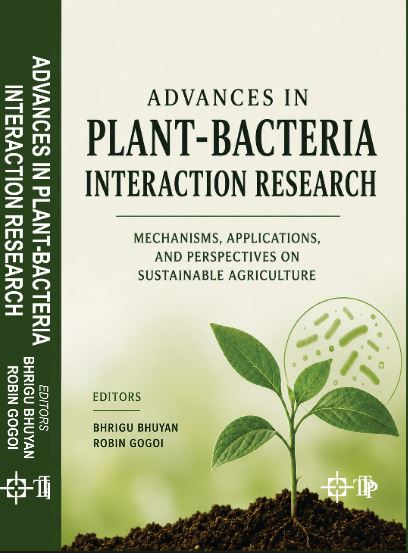
Advances In Plant-Bacteria Interaction Research
US$77.01US$85.57
Book details for Advances In Plant-Bacteria Interaction Research

Plant Pathology
Plant Bacteriology Refresher
US$36.00US$40.00
Book details for Plant Bacteriology Refresher

Agriculture · Plant Pathology
Detection and Field Management of Plant Viruses and their vectors
US$153.00US$170.00
Book details for Detection and Field Management of Plant Viruses and their vectors

Entomology · Environment/Forestry
Plant Reproductive Biology
US$90.00US$100.00
Book details for Plant Reproductive Biology

Agriculture · Biodiversity · Fisheries Science · Plant Pathology
Plant Sexual Reproduction Ecology
US$81.00US$90.00
Book details for Plant Sexual Reproduction Ecology